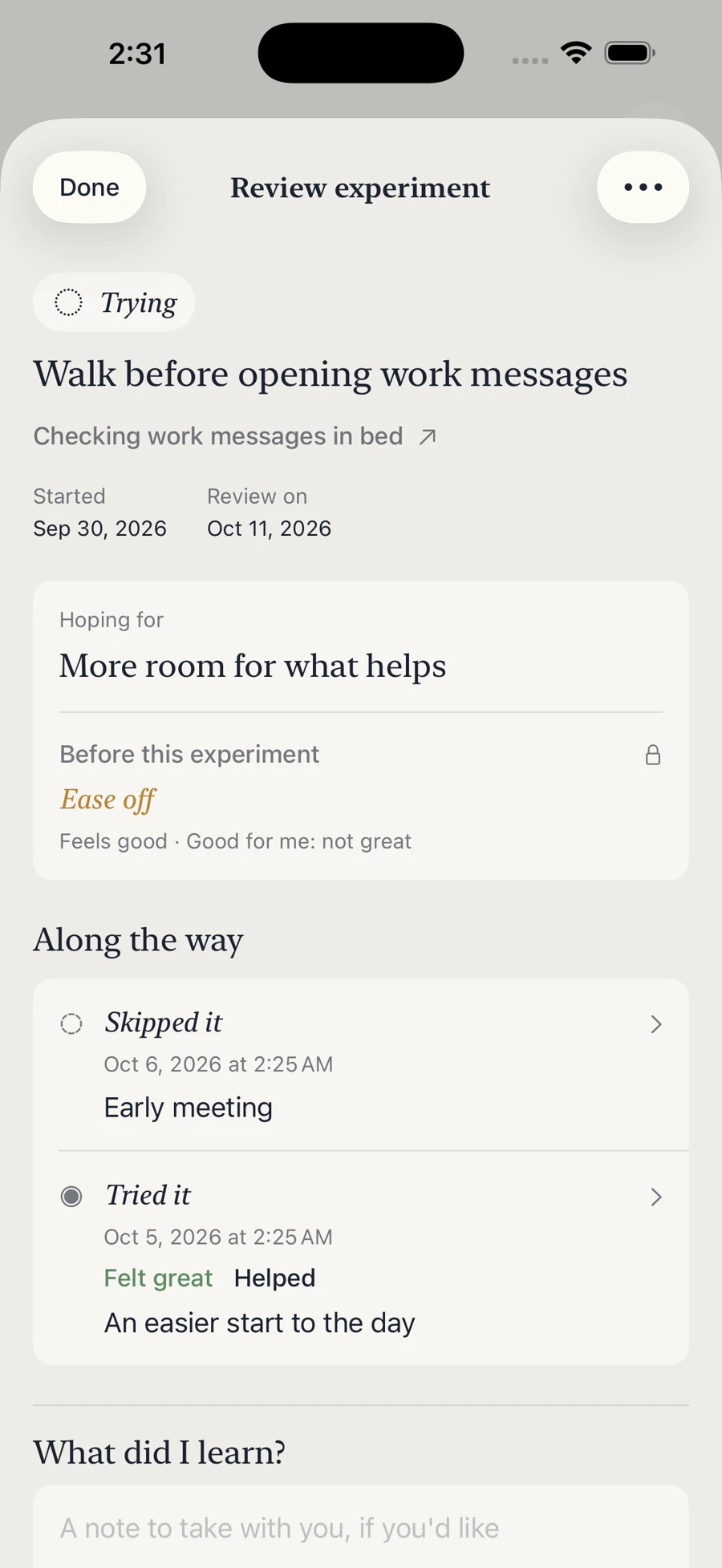
What Feels Good / iPhone
A feeling can become a next step.
How can reflection lead to a useful change without telling someone how to feel?
My role: Design engineering
Design decision 1
A feeling can become a next step.
Noticing a pattern is a beginning. What Feels Good connects an experience to a small adjustment someone can try and return to.
The design challenge
A reflection app needs a way forward without turning a feeling into a verdict. The map opens a choice; it does not make that choice for the person.
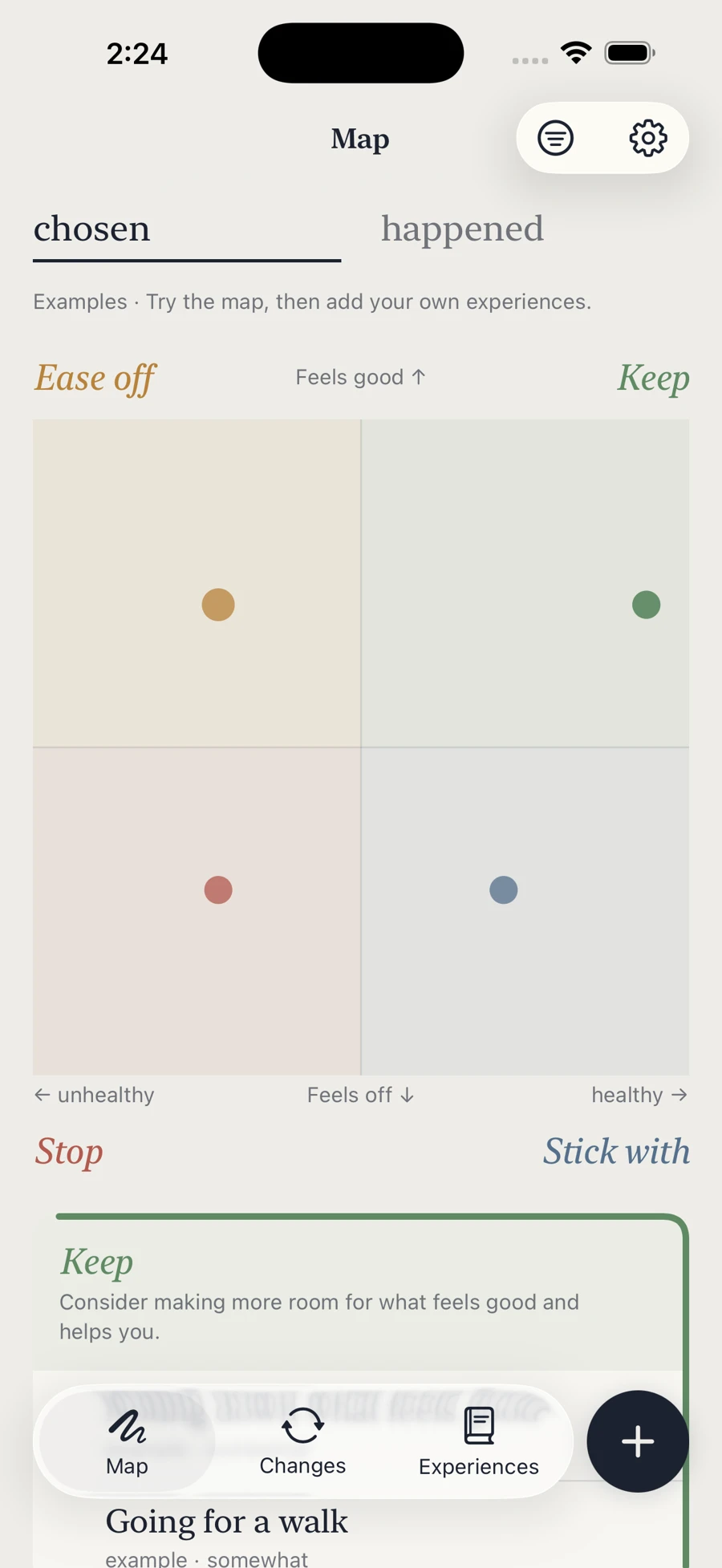
Make room for different kinds of agency
For chosen activities, consider how they feel and whether they help. For things that happen, consider how much influence you have.
Design decision 2
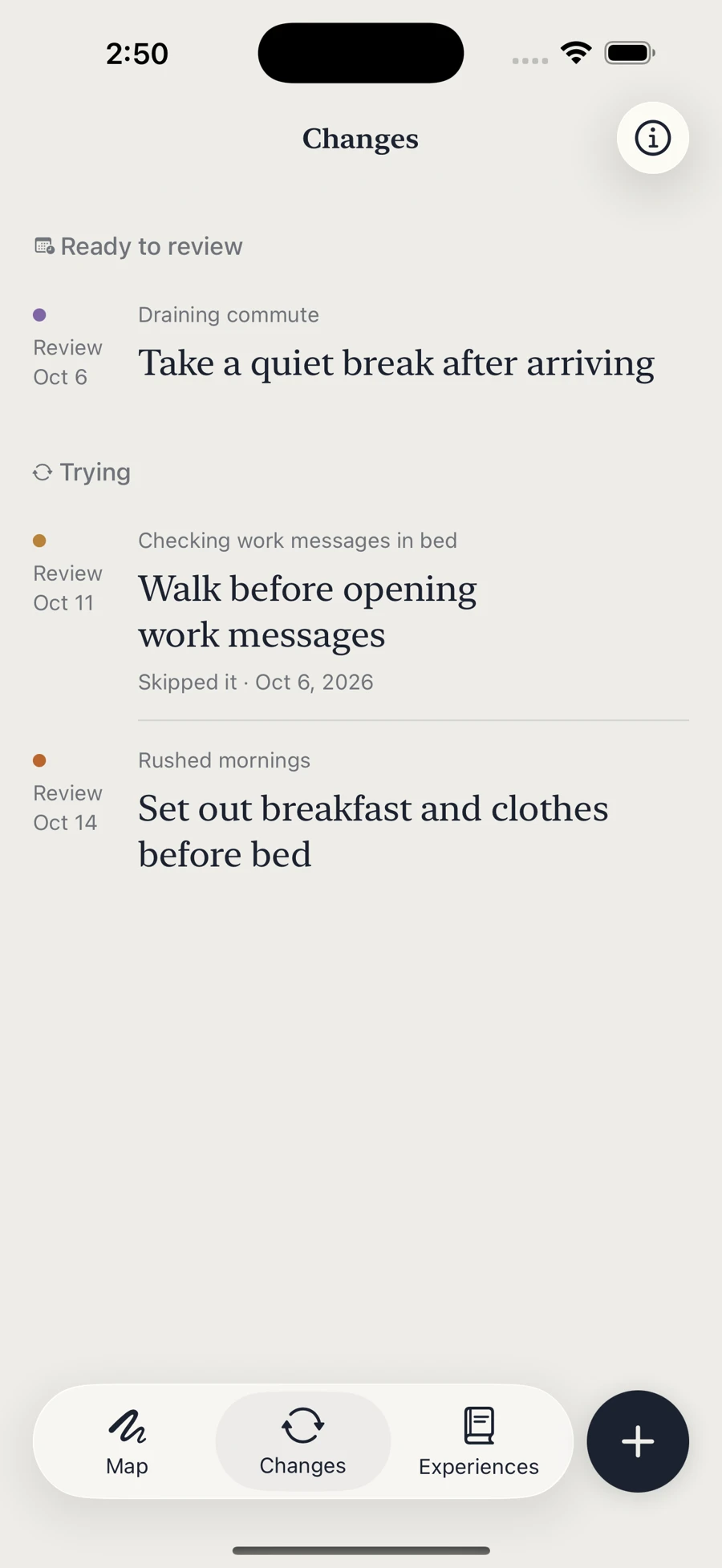
Try something small. Keep an honest record.
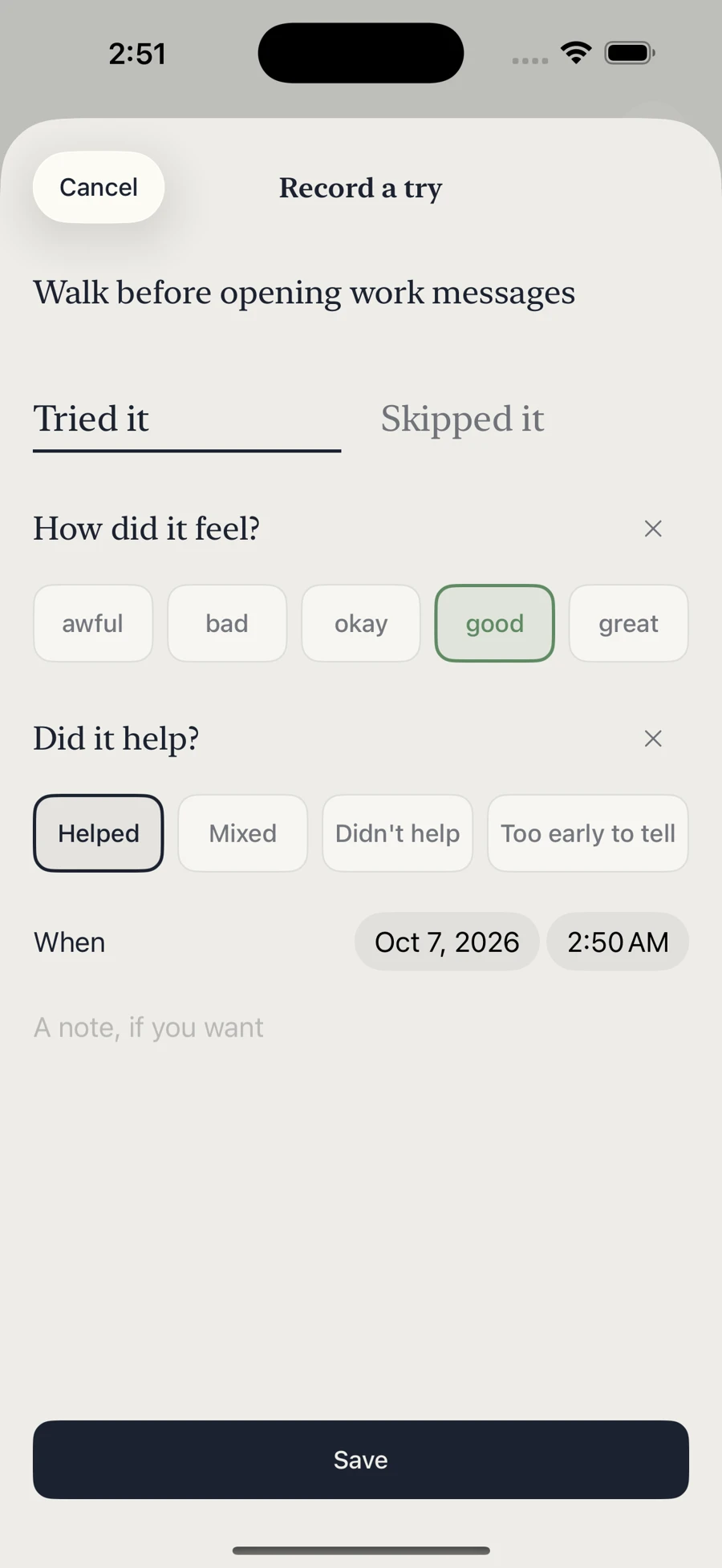
A change has an intention and a review date. Each check-in records a try or a skipped attempt, so the history can describe what happened without demanding a perfect streak.
Keep the starting point
The initial assessment stays with the experiment. Later observations add context instead of silently rewriting the reason for starting.
Make a skipped attempt recordable
Skipping is an available response. The interface keeps that observation in the same history as a completed try.
Design decision 3
Review the change. Choose what comes next.
At review, someone can keep the change, adjust the experiment, or finish it. The outcome stays separate from the original experience until they choose to update their map.
Preserve the thread
An adjusted experiment links back to the earlier attempt. Changing direction does not erase what was already tried.
A question to test next
Can someone distinguish reviewing an experiment from changing their standing assessment? The implemented flow makes the distinction; its clarity still needs usability research.