The question
How can a rich simulation stay understandable one decision at a time?
Design case study · Ice Age Life
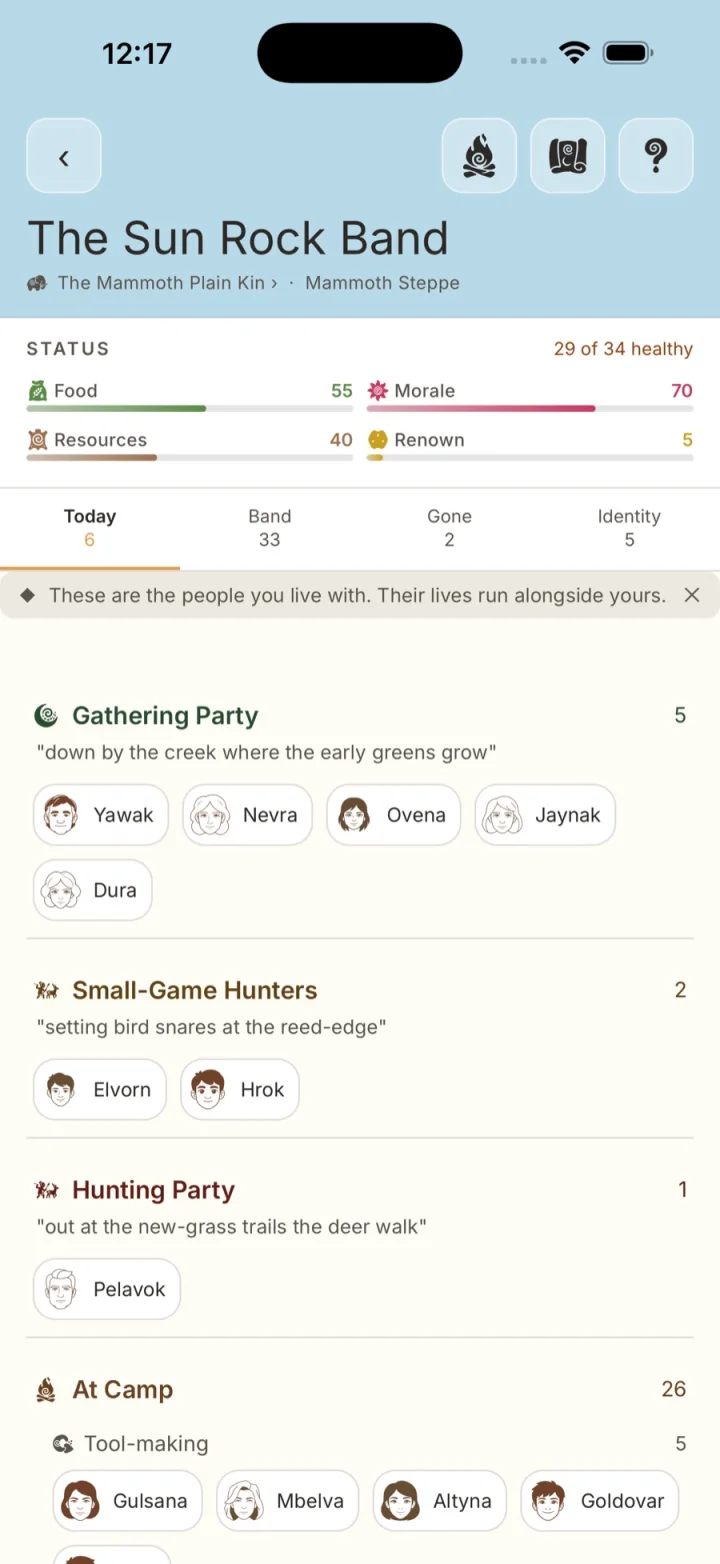
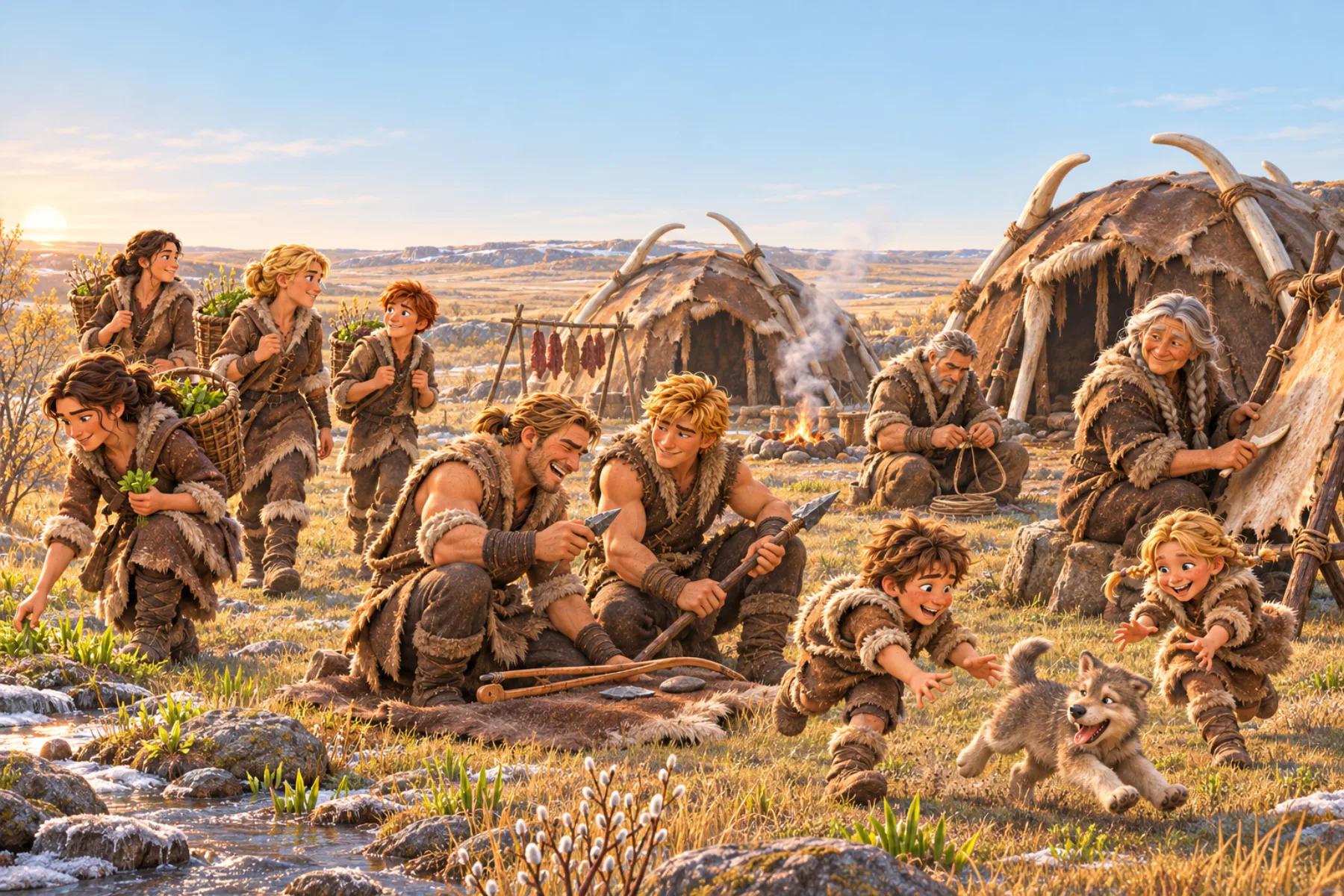
A prehistoric life sim with a whole simulated band behind every screen, and how I kept it readable: what a player sees first, what each tap promises, and what the art and words are allowed to say.
Before history
Twenty-two thousand years ago, the world was at its coldest.
And people were already painting, sewing, making music and burying their dead. Everything we call civilization grew out of lives like these.
Drawn to scale. The shaded band is the Last Glacial Maximum, about 26,000 to 19,000 years ago. The coldest stretch, the Last Glacial Maximum, ran from about 26,000 to 19,000 years ago. Farming is only half as old as the world the game is set in.
A deep simulation is easy to build badly.
The design work was making all of it readable, one decision at a time.
The question
How can a rich simulation stay understandable one decision at a time?
My role
The material
The readable center
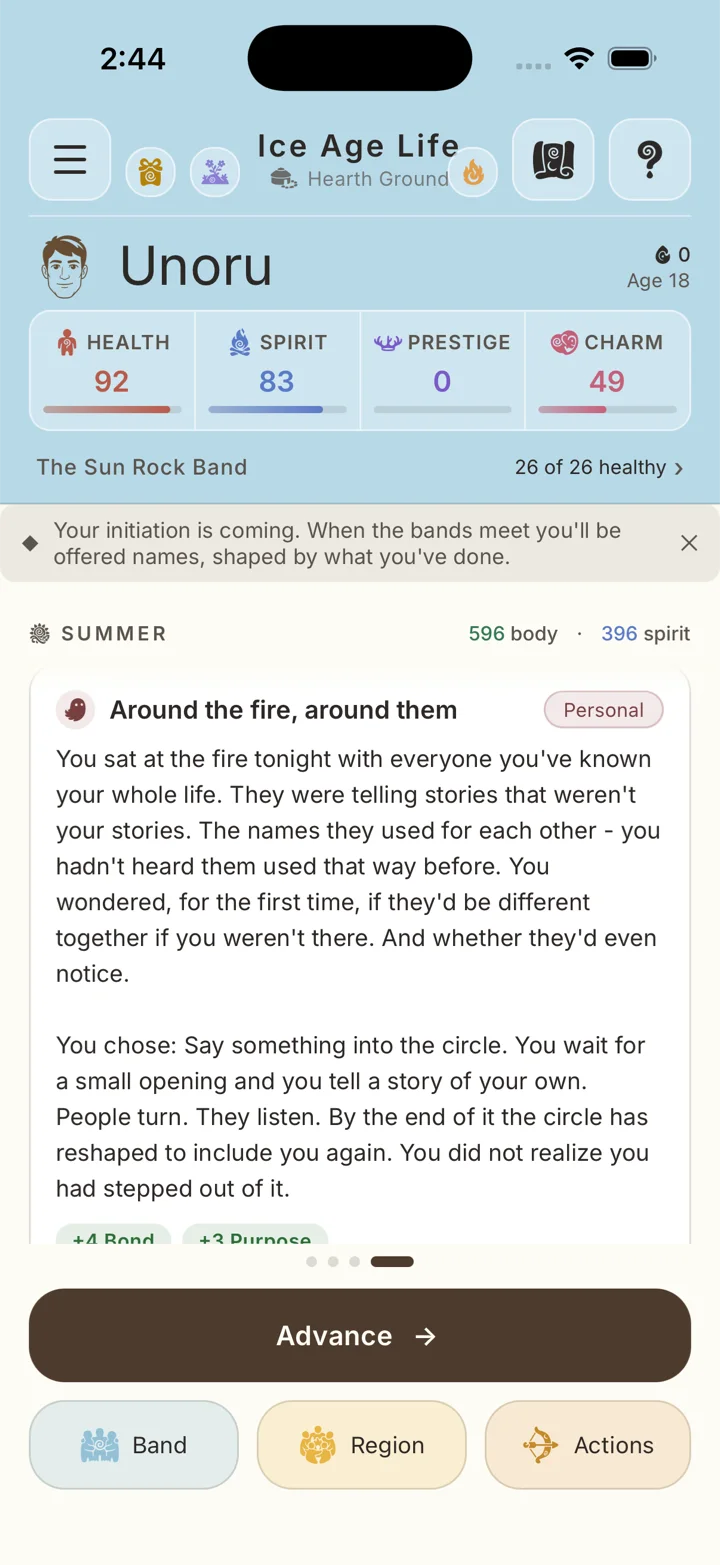
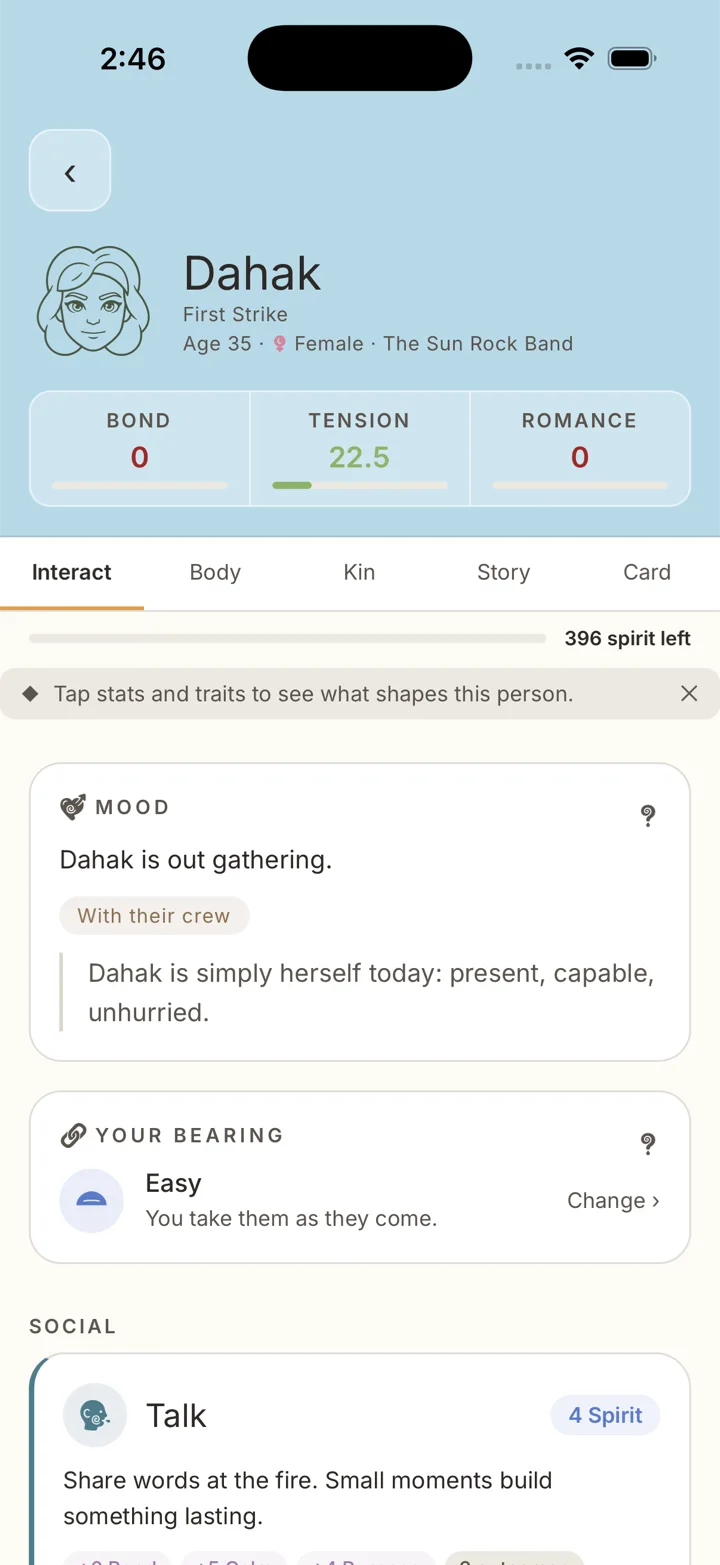
Behind every screen a band of thirty-odd people is living, pairing up, falling sick and moving away. The run hub doesn’t try to show that. It shows you, this year, and one thing to do next. Tap the pins.
Who you are. Your name, face and age, first. Everything else on the screen is about this one person.
Three questions, three views
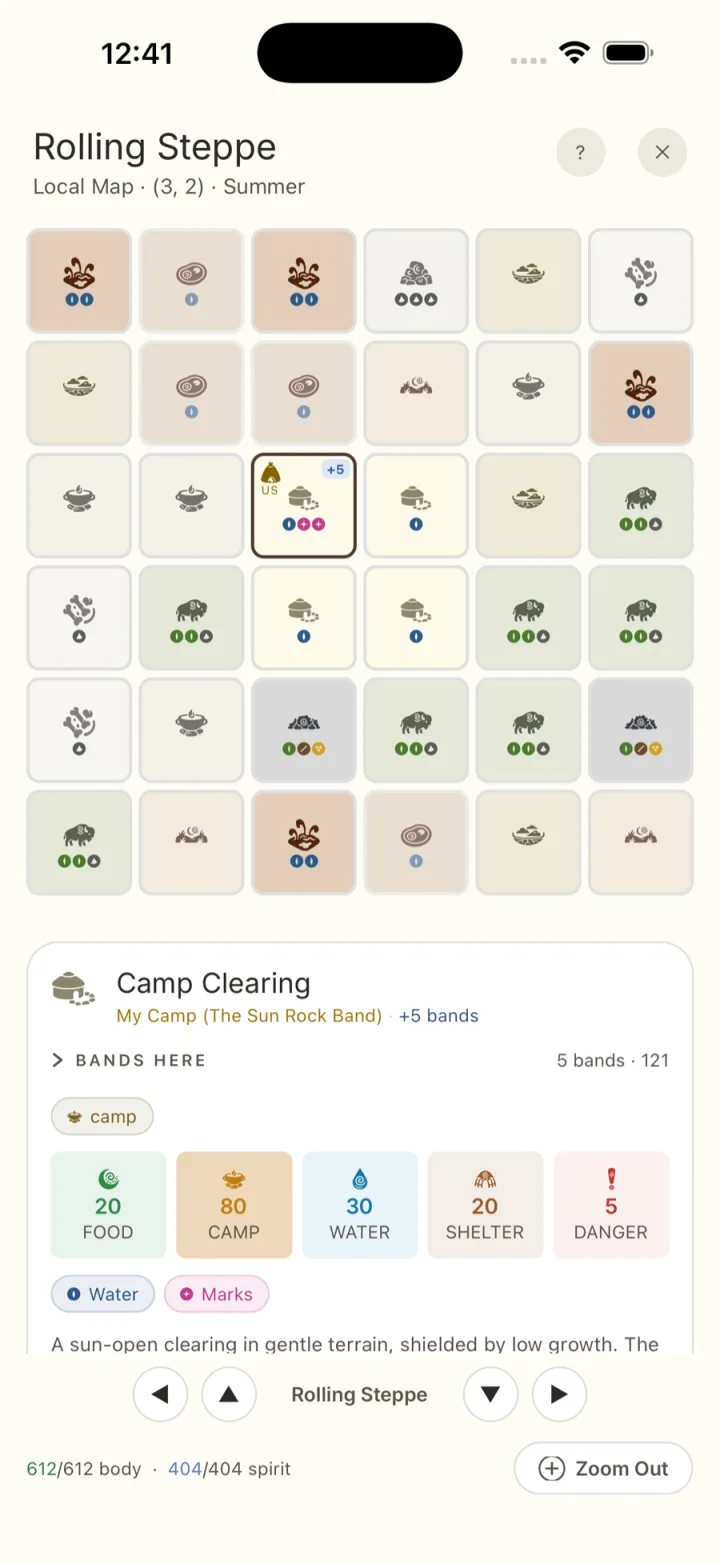
Places, people and the current moment each get their own view, so detail appears where the question is.
Read it before you play it
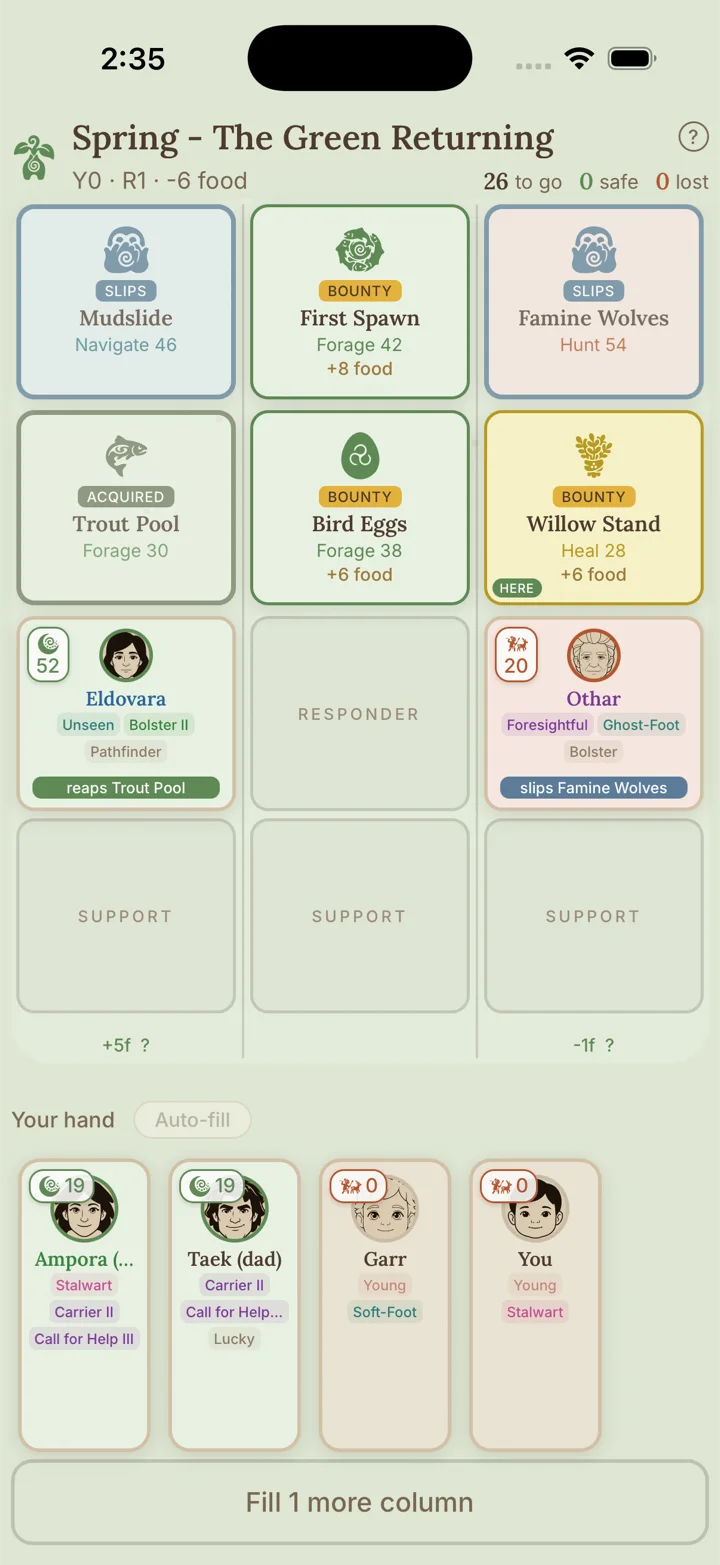
The season board is the game’s hardest screen: threats and bounties in lanes, a hand of people, numbers everywhere. Two decisions make it readable. Each front’s badge says whether it holds before you commit, and every result shows its sum. Play a round.
HoldsYour people can meet it.
SlipsThey can't. Someone gets hurt.
NobodyUnanswered. It reaches camp.
BanksFood comes home.
MissesNo food, no harm.
A front whose unheld harm reaches past its own lane, like a threat that strikes camp or a child left exposed, reads Not held, even if its own lane looks fine.
Results print their arithmetic, like Hunt 53 +21 lent = 74 vs 50. A loss you can check is one you learn from, not a dice roll you resent.
Where new players quit
The deepest screen was also the first one a newcomer met. The birth-year board ran about eight rounds, Auto-play was grayed out all year, and a round could dead-end on “Fill 1 more column” with an empty hand.

Every tap answers
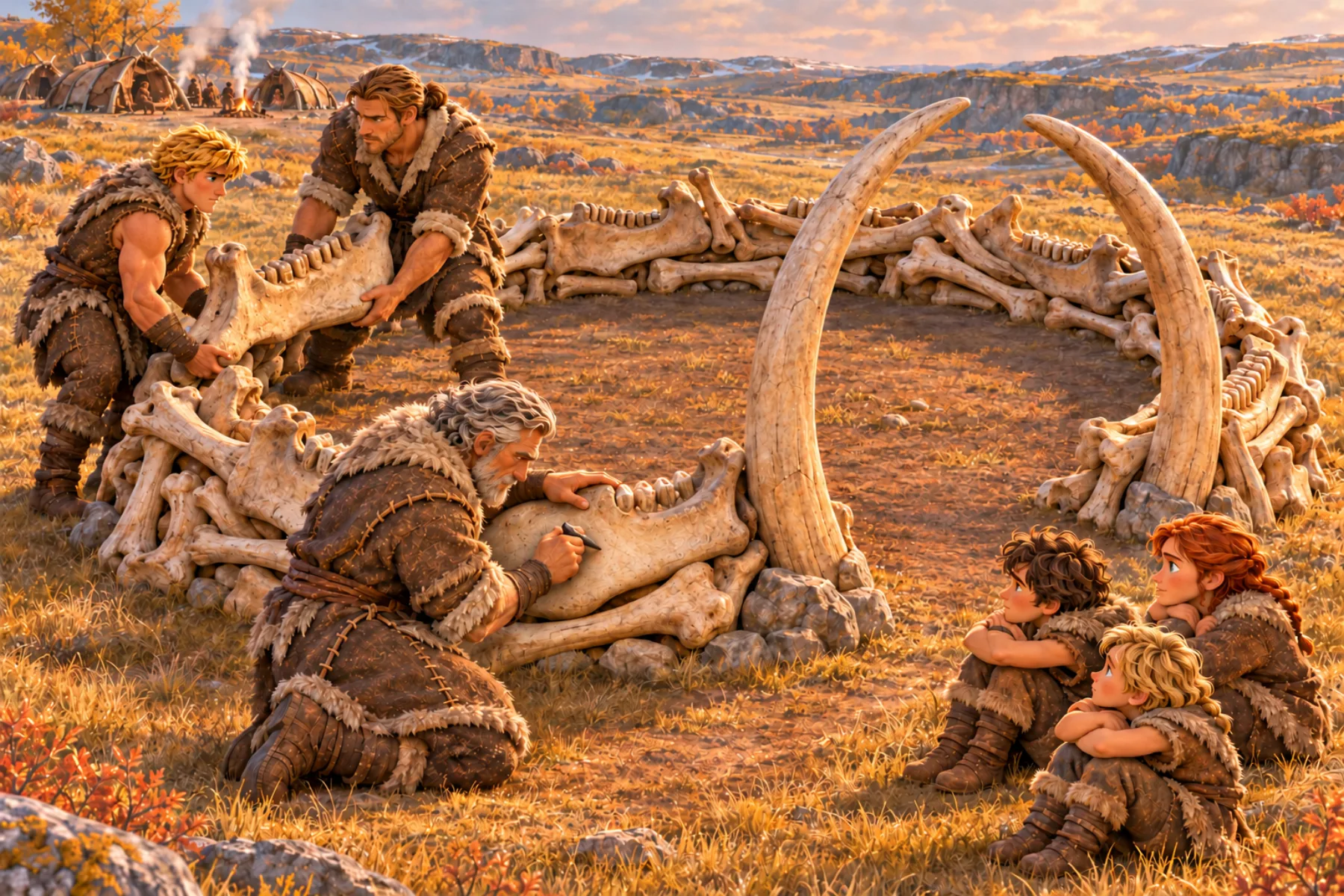
The bone circle is a ring of mammoth bone the band can raise on clear ground near camp. Its first picker made the wrong cells ignore your tap, and they looked almost the same as the right ones. A tap with no visible response reads as broken, not as “not allowed”. Try both versions.
A highlight, a state change or an explanation. Never nothing.
Usable and unusable need a visible difference, not an opacity nudge.
At least 44 points, and layout that doesn't jump when something is selected.
Choices that say what they do
Life cards are mostly prose, so each choice carries an icon that says what it does: a hand-picked one, else the injury or illness it risks, else the path it starts you on, else its strongest stat change. This is the real rule, on a real card.
Summer · Personal
Around the fire, around themYou sat at the fire tonight with everyone you’ve known your whole life. They were telling stories that weren’t your stories…
Say something into the circle
Sit with the wondering
A card with one choice and nothing to say shows a walking figure, not a blank.
A choice among several with nothing to show stays empty, so a missing icon is visible instead of papered over. A test fails the build on it.
A wolf, slowly
The first goal on the Mammoth Steppe is to tame the wolf at the edge of camp. Underneath, it’s a bond that climbs from 20 to 70. On screen there is no number at all: a few words for where things stand, and one quiet line a season about what the wolf did.
Grey-Footwary still
Grey-Foot watched you eat tonight from just past the firelight, and did not run when you looked up.

A wary wolf only joins the band in autumn and winter, when people and wolves follow the same herds, and goes back to its den in spring. Once it chooses you, it stays all year.
Dogs get the same 16 temperaments as people, a face as a pup and grown, and a life story: when it joined you, when it chose you, its first hunt, its litters.
One visual world
The icons were drawn or generated against a written style guide, then traced, reviewed and redrawn when one read as an abstract shape. Cohesion was a direction job, not a drawing job. Filter the set.
Initiated
When the bands meet, you're offered names, shaped by what you've done.
Emoji draw differently on every phone and break the handmade look.
Eleven looks, sixteen temperaments, two sexes, five ages: everyone you meet ages on screen.
Words that state the rule
While you’re still small, you place the band by hand - that is how the seasons teach you. Auto-fill opens once you’re old enough to help set them.
Auto-fill unlocks at age 4. Until then you place the band by hand.
Motion as hierarchy
One hand-built particle system, no confetti library, seven presets. A victory gets 72 falling motes; a child named at the fire gets 22 rising ones. Pick a moment.
A death 0
The rarest beat in the game gets the widest, fullest shower.

A color for every day
Each of the 366 days has its own light and dark palette. The calendar themes color the world (headers, cards, gradients) while the controls keep their places, so a new color every day never means relearning the screen.
Light · newyeardawn
Dark · firstdawn
Nothing behind a wall
The app opens straight into a life. A new player is only offered to restore an old save; backup is offered after their first finished life.
Some stones open to random rewards. Their odds are shown before any purchase, read straight from the draw code, with no hand-typed percentages.
The listing still said “Free, and no ads” after a version with ads shipped. I found it and rewrote it.

What I'd test next
The audience is small, so this page is design reasoning and what a small group showed me, not a growth chart. The questions I’d want answered next:
Ice Age Life
Free in any browser with nothing to install, and on iPhone, iPad and Android.